🪺 “I Can Build a Nest!” — How Adapted Books Support Young Learners + A Hands‑On Nest Craft
- Heather
- Mar 13
- 3 min read
Adapted books are one of the most powerful tools we have in early childhood special education. They take big ideas and break them into small, meaningful steps that young learners can understand, touch, and explore. When paired with visuals, Velcro pieces, and simple, predictable language, adapted books become accessible for students with autism, sensory processing needs, fine‑motor delays, and emerging communication skills.
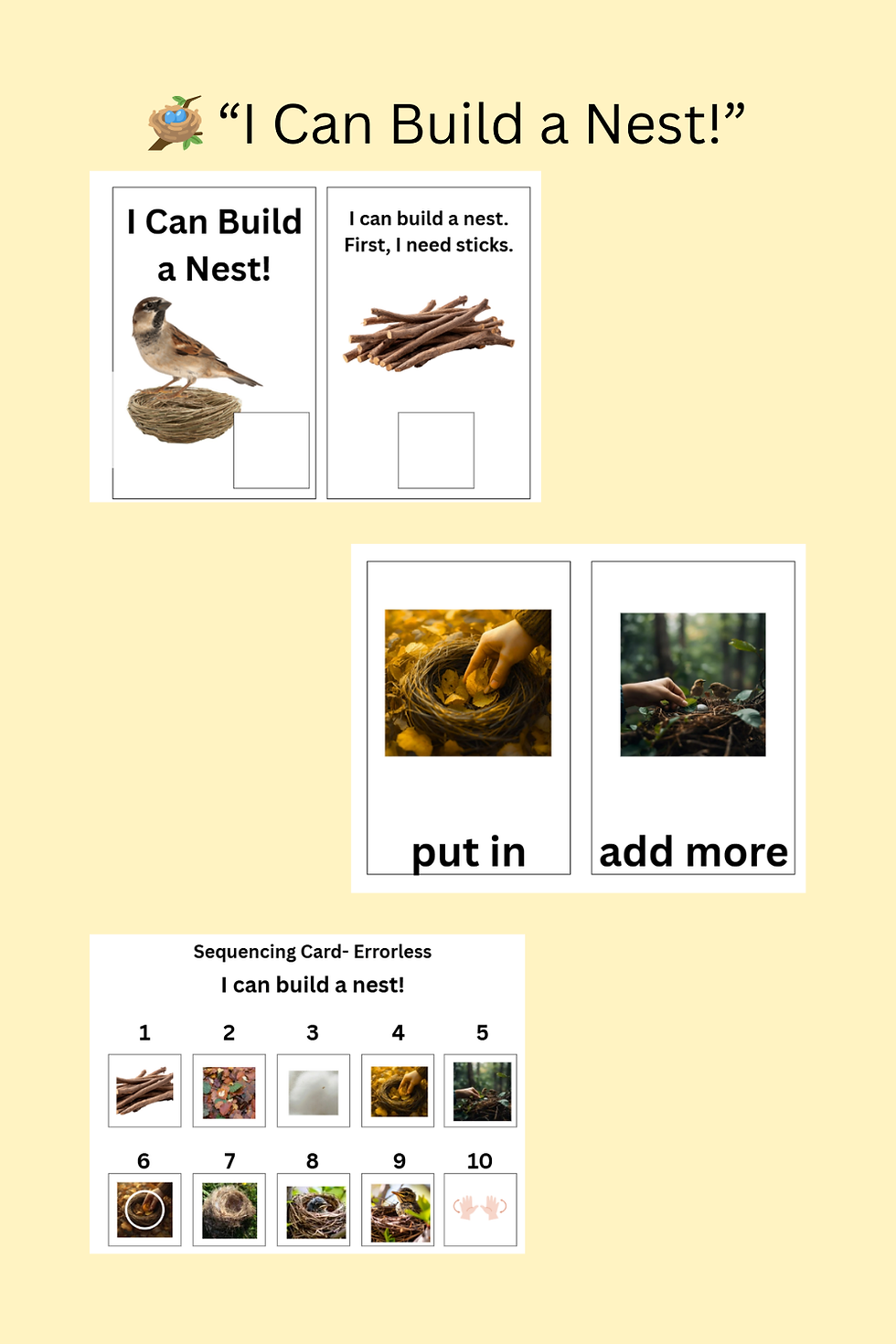
One of my favorite spring‑themed adapted books is “I Can Build a Nest!”—a simple, interactive story that invites children to gather materials, build a nest, and celebrate their creation. It’s hands‑on, language‑rich, and perfect for preschool, ECSE, and early learners who thrive with repetition and movement.
Let’s explore how adapted books support learning and how you can bring this one to life in your classroom.

🌿 Why Adapted Books Work for Young Learners
Adapted books are more than just stories—they’re multi‑sensory learning experiences. Here’s why they’re so effective:
1. Predictable Language Builds Confidence
Young learners benefit from simple, repeated phrases. Predictability reduces cognitive load and increases comprehension. In “I Can Build a Nest!”, each page begins with: “I can build a nest.” This repetition anchors the story and supports early literacy.
2. Movable Pieces Increase Engagement
Velcro pieces give students a job to do on every page. Matching sticks, leaves, and soft materials keeps hands busy and minds focused.
3. Visuals Support Understanding
Clear visuals help students connect the text to real‑world concepts. For students with autism or language delays, visuals are essential—not optional.
4. Fine‑Motor Practice Happens Naturally
Picking up pieces, placing them on the page, and turning laminated pages all build fine‑motor strength in a meaningful context.
5. Adapted Books Support AAC + Core Words
Books like this one naturally embed core words such as: put, in, more, need, make, ready, done These are powerful words for communication and can be modeled throughout the story.
🪵 How to Use “I Can Build a Nest!” in Your Classroom
Here are simple, practical ways to make the most of this adapted book:
1. Use It in Small Groups
Read the book during a spring literacy center or small‑group rotation. Give each student a turn to add a material to the nest.
2. Pair It With Real Materials
Bring in sticks, leaves, yarn, and cotton balls. Let students touch and explore the textures as you read.
3. Model Core Words
Use a core board or AAC device to model words like put, in, more, need, done Keep the board visible on every page.
4. Add a Sequencing Extension
After reading, use sequencing cards:
Sticks
Leaves
Soft stuff
Make round
Nest ready This reinforces comprehension and early science concepts.
5. Use It During Sensory Play
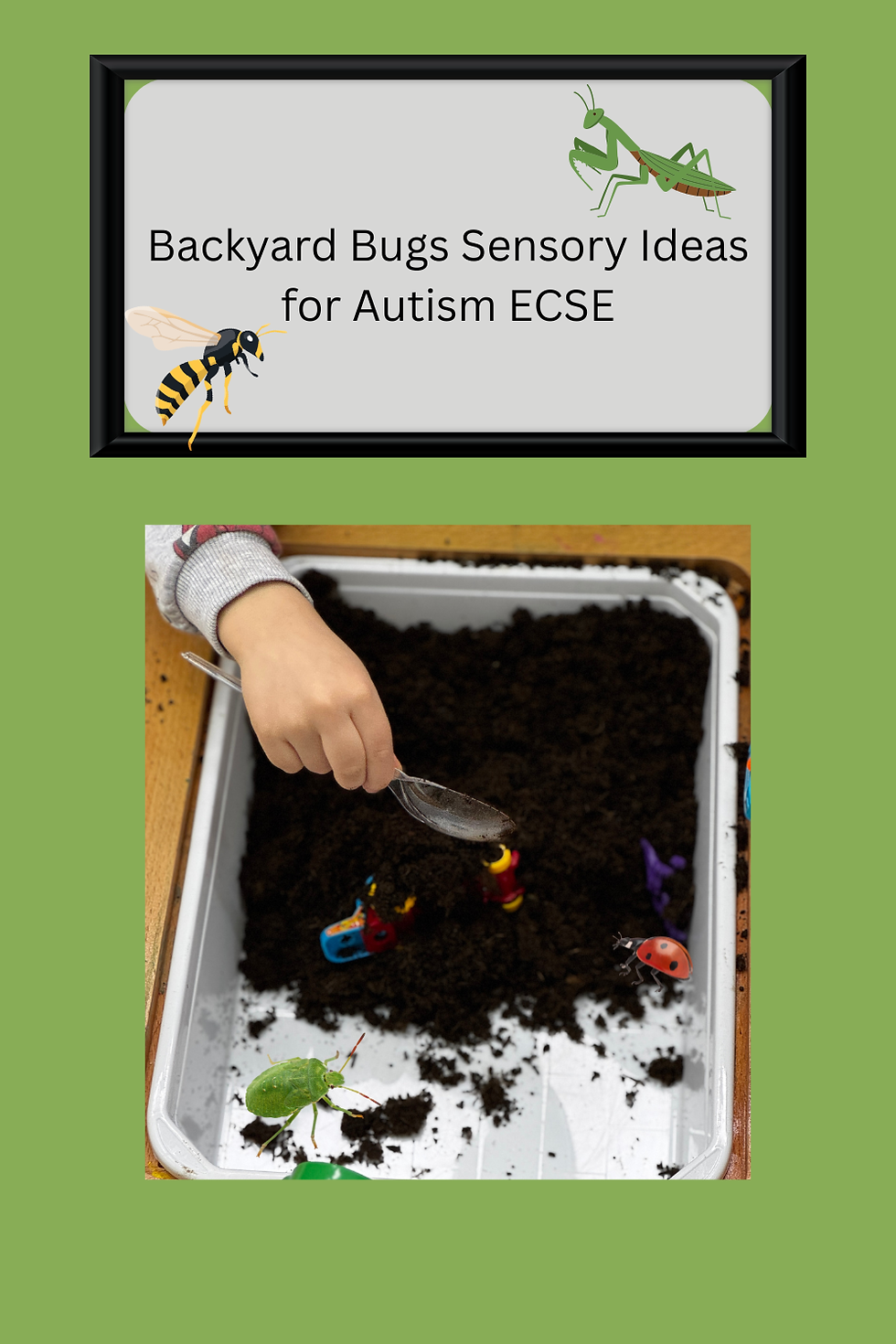
Add nest materials to a sensory bin and let students “build” while you reread the story.
🪺 Hands‑On Craft: Build‑Your‑Own Bird Nest
This craft pairs beautifully with the book and gives students a chance to create their own nest using real materials.
Materials
Paper bowl or small paper plate
Brown shredded paper or raffia
Small sticks
Leaves (real or artificial)
Yarn or cotton balls (“soft stuff”)
Glue
Optional: small plastic eggs or a paper bird cutout
Steps
1. Start With the Base
Give each student a paper bowl or plate. Explain: “This is our nest. Let’s build it just like in the book!”
2. Add Sticks
Students glue sticks around the edge. Model: “Put it in.” “More sticks.”
3. Add Leaves
Layer leaves on top of the sticks. Talk about textures, colors, and shapes.
4. Add Soft Stuff
Let students glue yarn or cotton balls inside the nest. Model: “Soft.” “In.” “Make it round.”
5. Add Eggs or a Bird
Students can place eggs or a bird in their finished nest. Celebrate with: “Your nest is ready!”
🌼 Why This Craft Works
It mirrors the steps in the book
It reinforces sequencing
It builds fine‑motor skills
It encourages sensory exploration
It gives students a finished product they’re proud of
🐦 Final Thoughts
Adapted books like “I Can Build a Nest!” help young learners connect literacy, language, and hands‑on exploration in a way that feels natural and joyful. When paired with a simple craft or sensory activity, the learning becomes even more meaningful.
Comments