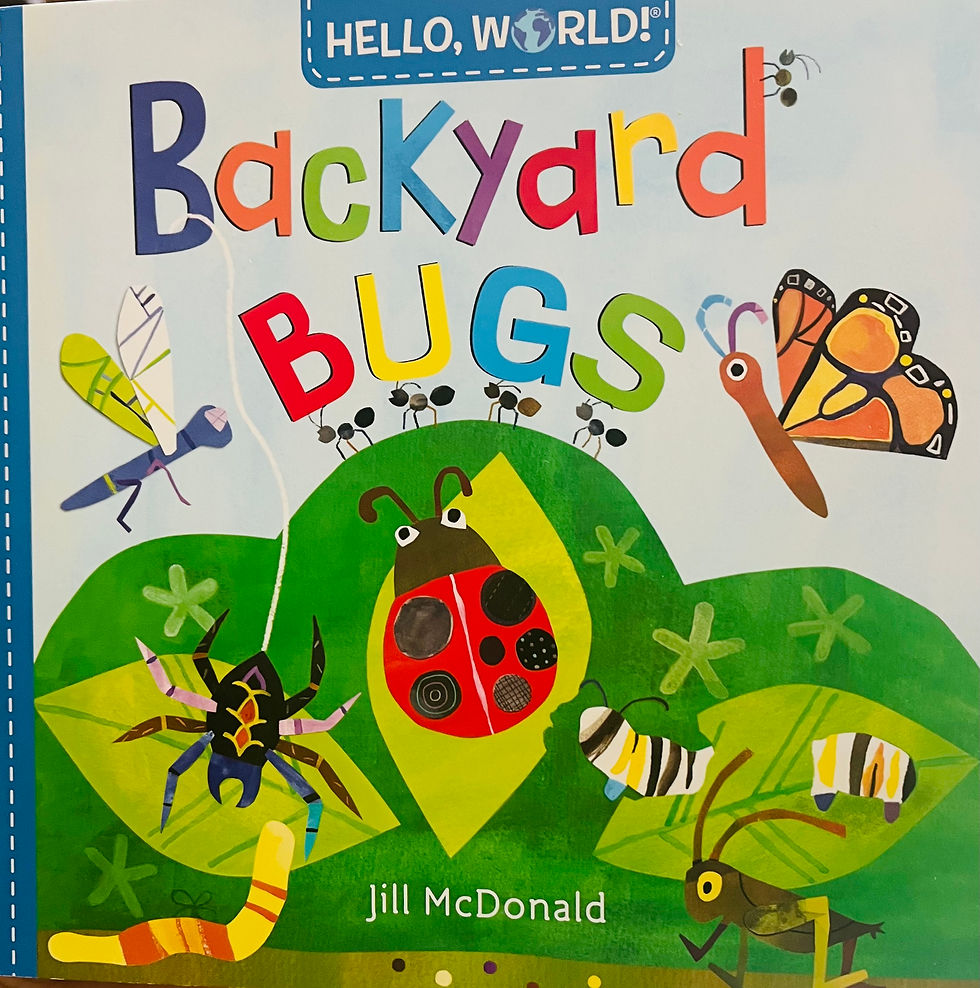
Adapting Backyard Bugs by Jill McDonald for an Autism ECSE Classroom
- Heather
- 4 days ago
- 3 min read
Early childhood special education teachers know that the right book can open the door to engagement, communication, and meaningful sensory exploration. Backyard Bugs by Jill McDonald is one of those rare titles that works beautifully across mixed‑ability preschool groups. The bright illustrations, simple text, and clear categories make it a natural fit for students who benefit from visual supports, repetition, and hands‑on learning.
In my autism ECSE classroom, this book becomes more than a read‑aloud — it becomes a full sensory experience that supports joint attention, fine‑motor skills, communication, and regulation. Below, I’m sharing how I adapt Backyard Bugs and build sensory‑rich activities that help every learner participate.
Why Backyard Bugs Works for ECSE Learners
This book checks so many boxes for early childhood special education:
Predictable, simple text that supports comprehension and AAC modeling
High‑contrast illustrations that help students visually attend
Clear categories (ants, bees, butterflies, worms, etc.) for sorting and matching
Built‑in movement words that translate easily into gross‑motor play
Real‑world connections that make it easy to extend into sensory bins and outdoor exploration
Because the content is familiar and concrete, students can access the story whether they’re emerging communicators, sensory seekers, or working on early literacy skills.
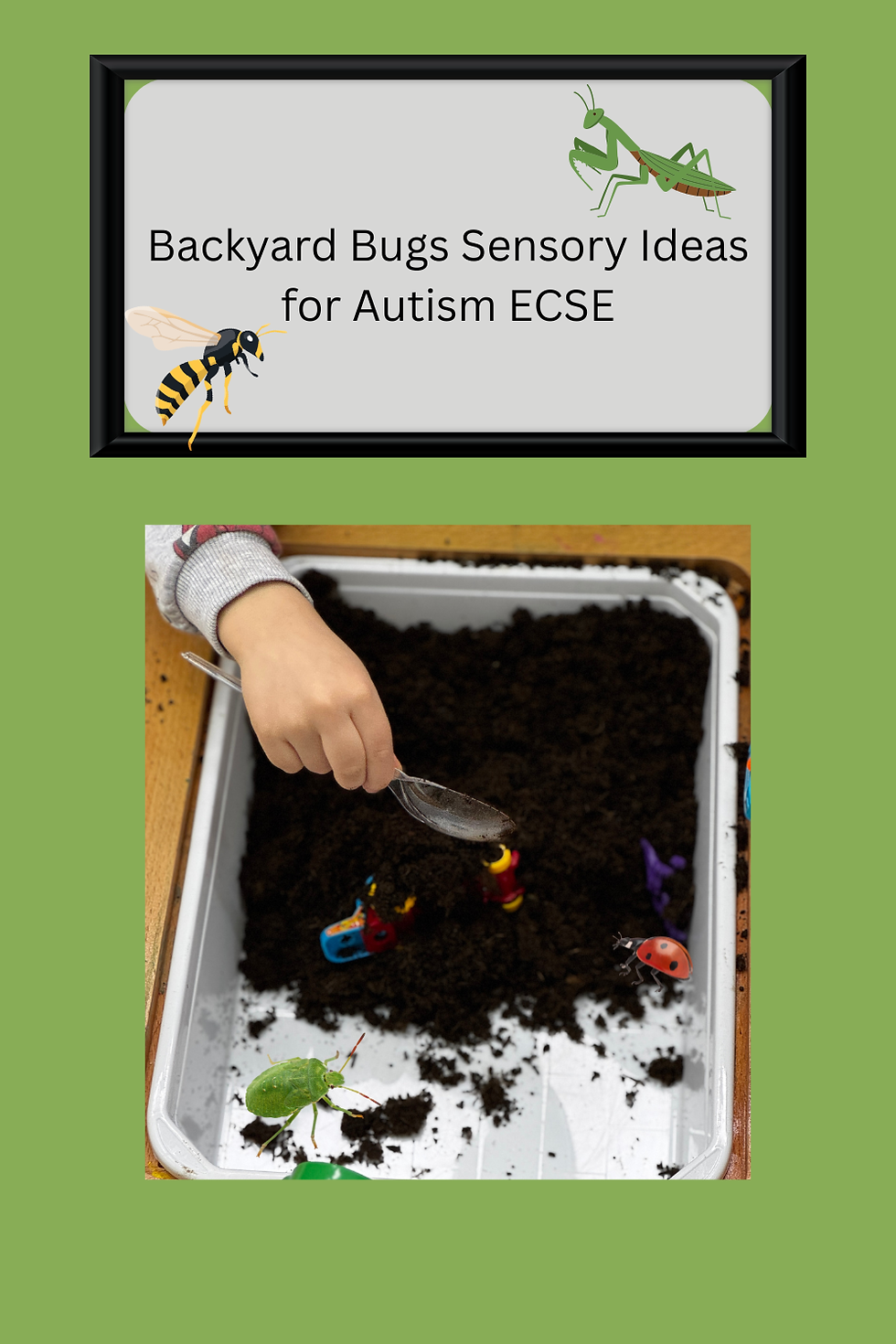
Sensory Bin #1: Shredded Tires, Flowers, and Bugs
My anchor sensory bin for this unit includes:
Shredded rubber tires (amazing proprioceptive input and a unique texture)
Artificial flowers
Plastic bugs
Students can:
Search for bugs
Sort by color or type
Match bugs to real‑photo cards
Scoop, pour, and transfer materials for fine‑motor practice
Hide and find bugs to build joint attention
I keep a simple visual direction card nearby: Find a bug → Put it in the cup → Show a friend.
This keeps the play structured and accessible for students who need clear expectations.
More Sensory Ideas to Expand the Unit
1. Worm Garden Dig Bin
A classroom favorite. Materials: potting soil or cocoa husk, rubber worms, mini shovels, tongs, small pots. Skills: digging (heavy work), bilateral coordination, pretend play. Supports: real‑photo worm cards, First/Then visuals, handwashing routine card.
2. Butterfly Life Cycle Tray
Perfect for sequencing and vocabulary. Materials: pasta shapes (orzo = eggs, rotini = caterpillars, bowtie = butterflies), leaves, small cups labeled 1–4. Skills: sequencing, sorting, matching, early science concepts. Supports: visual life‑cycle strip, AAC modeling (“egg,” “caterpillar,” “butterfly”).
3. Bug Rescue Water Bin
A high‑engagement option for sensory seekers. Materials: water, plastic bugs, slotted spoons, nets, sponges. Skills: hand strengthening, cause/effect, turn‑taking. Supports: color‑coded sorting cups, visual rule card (“Gentle hands. Bugs stay in the water.”).
4. Flower Garden Fine‑Motor Bin
Great for students who need resistance and push/pull work. Materials: green shredded paper, fake flowers, playdough “soil,” small pots. Skills: pincer grasp, hand strength, pretend play. Supports: real‑photo flower cards, simple scripts (“I plant flower.”).
5. Bug Movement Gross‑Motor Path
Bring the book to life with whole‑body movement. Stations:
Crawl like an ant
Fly like a bee
Wiggle like a worm
Hop like a grasshopper
This supports regulation, following directions, and motor planning. Add visual icons for each
Do you need to get a set of bugs for your classroom? Please consider using my Amazon Affiliate link to purchase here: https://amzn.to/4sPb7wd
Adapted Book Extensions
To make Backyard Bugs accessible for all learners, I add:
Real‑Photo Matching Boards
Students match bugs to:
Identical bugs
Habitats
Movement types
Interactive Flaps
“Who is hiding under the leaf?” “What bug is crawling on the flower?” Flaps increase engagement and support joint attention.
Tactile Elements
Fuzzy pipe‑cleaner caterpillars
Smooth stones for beetles
Felt wings for butterflies
Sequencing Strips
Great for life cycles, ant trails, or bee pollination.
Communication Supports (AAC + Total Communication)
Core Words to Model
find
look
help
more
in/out
go/stop
Fringe Vocabulary
bug
flower
worm
butterfly
bee
ant
garden
Simple Scripts for Students
“I found a ___.”
“Help me dig.”
“More bugs.”
“Bug in cup.”

Check out my TPT resource with engaging supports:
Bring Backyard Bugs by Jill McDonald to life with this hands‑on, interactive adapted book set designed specifically for Autism and ECSE classrooms. This resource includes a visual board, counting math center, and bug matching board—perfect for literacy centers, small‑group instruction, independent work systems, and spring thematic units.
Final Thoughts
Backyard Bugs is more than a springtime read‑aloud — it’s a flexible, sensory‑rich unit that supports communication, motor skills, engagement, and joyful learning. With a few simple adaptations, this book becomes accessible to every learner in an autism ECSE classroom.
If you’re looking for a way to bring nature, movement, and hands‑on exploration into your room, this book is a perfect place to start.
Comments