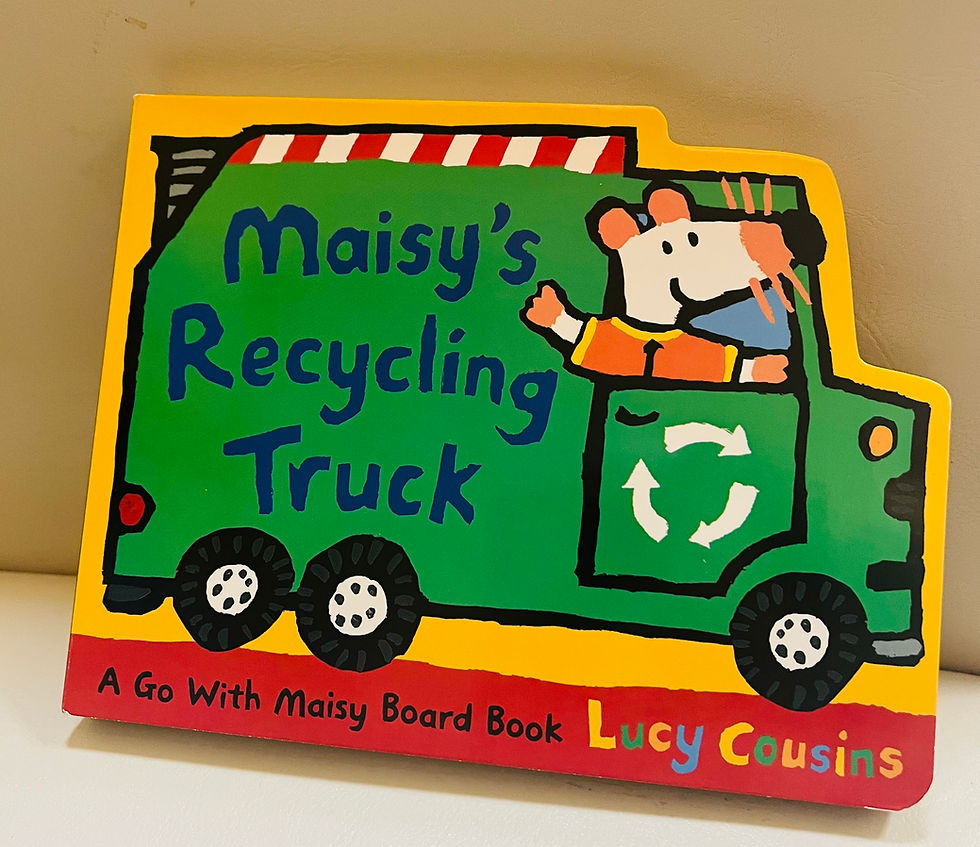
Adapting Maisy’s Recycling Truck for an Inclusive ECSE Reduce–Reuse–Recycle Unit
- Heather
- 4 days ago
- 3 min read
Teaching young children about recycling doesn’t have to be abstract or complicated. In early childhood special education, the most meaningful lessons are hands‑on, visual, predictable, and connected to real life. Maisy’s Recycling Truck by Lucy Cousins is a perfect anchor text for introducing “Reduce, Reuse, Recycle” in a way that feels playful, accessible, and developmentally appropriate for preschoolers and ECSE learners.
In this post, I’m sharing how to adapt the book, how to build sensory‑rich learning centers, and how to embed communication, fine motor, and social‑emotional goals throughout the unit.
♻️ Why Maisy’s Recycling Truck Works So Well in ECSE
The storyline is simple and predictable
The illustrations are bold and high‑contrast
The concept of sorting is concrete and easy to model
The truck theme is highly motivating for many learners
It naturally lends itself to movement, sensory input, and real‑life routines
With a few thoughtful adaptations, this book becomes a powerful tool for teaching environmental responsibility and foundational early learning skills.
🚛 Step 1: Make the Story Interactive and Accessible
Use real photos and tactile pieces
Pair each page with real‑photo visuals of:
Paper
Plastic
Metal
Add textures:
Corrugated cardboard for paper
Smooth bottle caps for plastic
Foil squares for metal
This supports learners with visual impairments, sensory needs, and emerging symbolic understanding.
Add a predictable refrain
A simple repeated line helps with engagement and joint attention:
“Sort it out, Maisy!”
Say it together each time Maisy finds a new item.
Embed total communication
Provide:
Core boards (go, stop, in, out, help, more, truck)
Visual sentence frames (“I put ___ in.”)
A first/then board for students who need structure
🧩 Step 2: Build Hands‑On Learning Centers
These centers can run all week and reinforce the Reduce–Reuse–Recycle theme through play.
1. Sorting Center (Fine Motor + Cognition)
Three bins labeled with real photos
Tongs, scoopers, or grabbers for strengthening
Errorless options for emerging learners
2. Reuse Craft Center
Turn clean recyclables into:
Shakers
Collage art
“Build a truck” creations
Add a 3–4 step visual recipe to support independence.
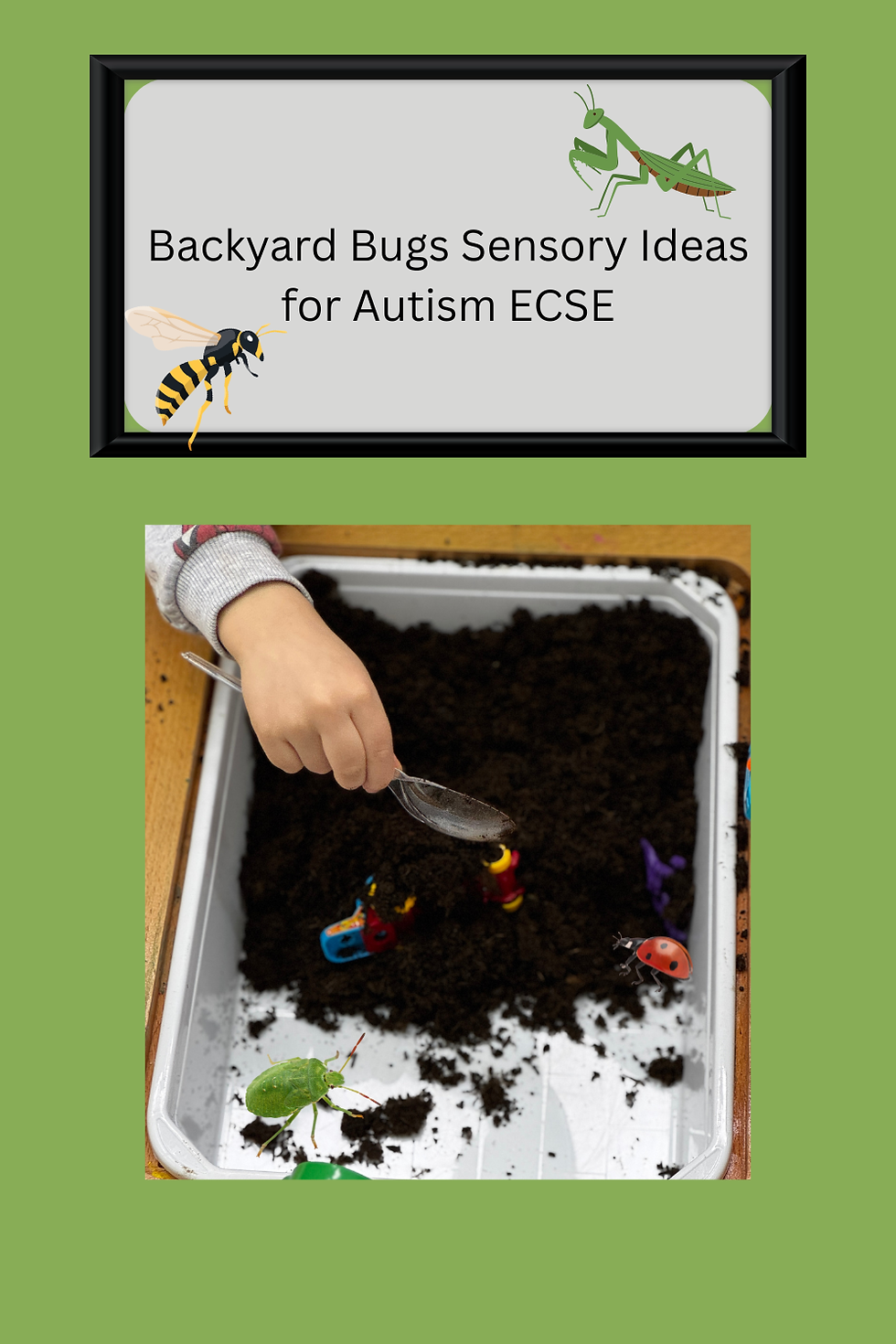
3. Sensory Bin: Maisy’s Recycling Yard
Fill with:
Shredded paper
Blue gems
Foil pieces
Small trucks and bottle caps
Students “drive” the truck to collect and sort items.
4. Dramatic Play Recycling Station
Include:
Vests
Gloves
Clipboards
Picture checklists
Bins around the room to “collect” recycling
This is a great place to practice turn‑taking and cooperative play.
🗣️ Step 3: Embed Language and Social Skills
Core words to target
go
stop
in
out
help
more
truck
Fringe vocabulary
paper
plastic
metal
recycle
trash
Sentence frames
“I put ___ in.”
“This is ___.”
“I need help.”
Social skills
Waiting for a turn to drive the truck
Following a picture checklist
Helping a friend sort items
📝 Step 4: Connect to IEP Goals Naturally
This unit supports a wide range of ECSE objectives, including:
Joint attention: Looking at the item Maisy finds and matching their own
Fine motor: Using tongs to place items in bins
Daily living: Cleaning up and sorting with 1 prompt
Communication: Requesting “more” or “help” using total communication
Behavioral regulation: Following a first/then routine during centers
🌱 Step 5: Extend the Learning Beyond the Book
Here are simple, meaningful ways to deepen the Reduce–Reuse–Recycle theme:
Create a class recycling helper job
Do a “Can it be recycled?” yes/no sort with real photos
Try a Reuse Challenge: turn a box into something new
Go on an outdoor trash walk with grabbers and picture checklists
Make a class graph of what students recycle at home
These activities help students generalize the concept across settings.
Final Thoughts
Teaching recycling in early childhood doesn’t have to be complicated. When we break big ideas into hands‑on, meaningful routines, our students begin to understand their role in taking care of the world around them. Maisy’s Recycling Truck gives us a playful, concrete way to model sorting, helping, and making responsible choices — all while building communication, fine motor skills, and independence.
Whether your learners are driving trucks through a sensory bin, sorting real‑photo items, or proudly becoming the classroom “Recycling Helper,” these moments add up. They build confidence. They build understanding. And they show our students that even small actions can make a big difference.
If you need a copy of Maisy's Recycling Truck please consider using my Amazon Affiliate link: https://amzn.to/4dWEE3e
Comments