🌱 How to Build a Garden Sensory Bin Using Amazon Supplies
- Heather
- Mar 5
- 3 min read
A garden sensory bin invites preschoolers to dig, scoop, plant, and harvest—building fine motor skills, language, and imaginative play along the way. Whether you’re a teacher setting up a classroom center or a parent creating hands‑on fun at home, this bin is simple to assemble and endlessly engaging.
This guide walks you through the best Amazon supplies to use, how to set up your bin, and playful learning ideas that support early childhood development.
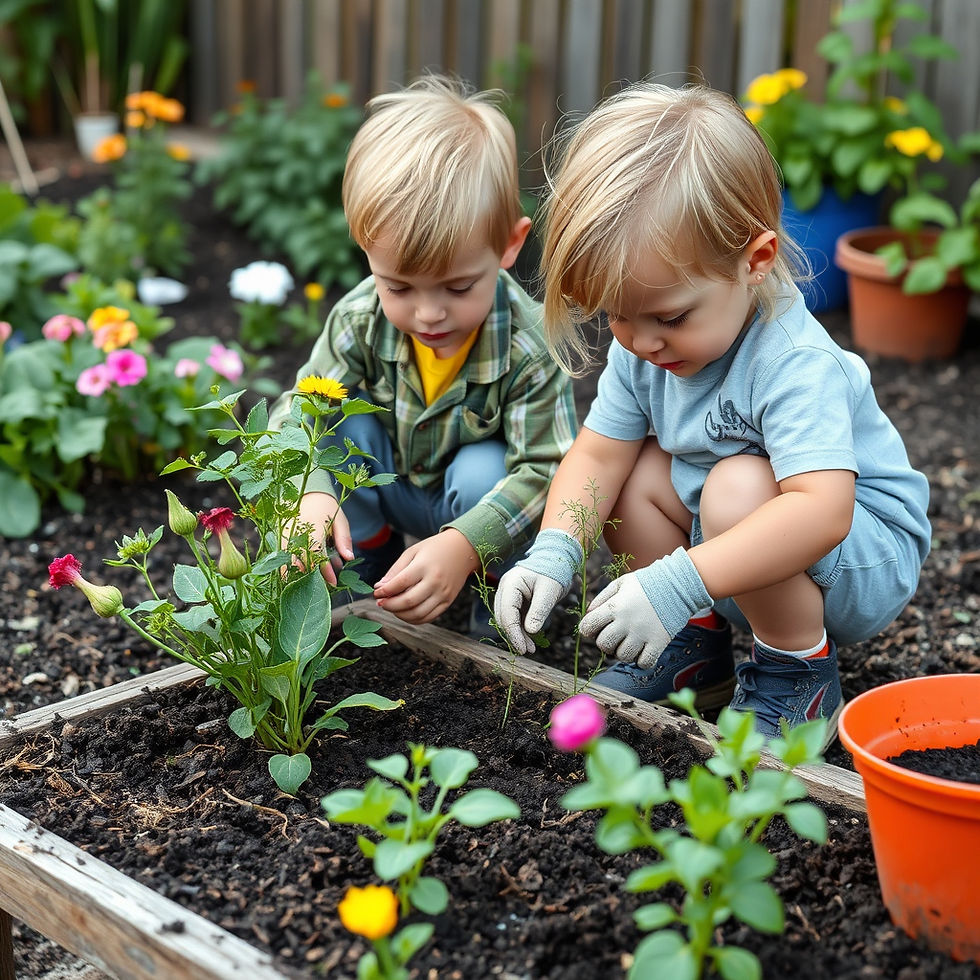
🧺 Supplies You’ll Need (All Easy Amazon Finds)
These items create a rich, garden‑themed sensory experience while supporting fine motor strength, hand‑eye coordination, and pretend play.
Plastic Sensory Bin or Storage Tub — Clear, latching bins work best for visibility and cleanup.
Filler Material — Options include dried black beans (soil), brown kinetic sand, or shredded paper “mulch.”
Mini Gardening Tools — Child‑sized trowels, rakes, and scoops for digging and planting.
Artificial Flowers or Felt Flowers — Bright, durable, and perfect for “planting.”
Play Vegetables or Mini Produce — Carrots, tomatoes, radishes, and more for harvesting.
Small Pots or Planters — Great for pretend planting and transferring.
Tongs or Tweezers — Add fine motor challenge as children pick up flowers or veggies.
Watering Can (Dry Use) — Encourages pretend play without the mess.
Optional Add‑Ons: Plastic bugs, smooth stones, seed packets, or labels for literacy play.
🌼 Step‑by‑Step Setup
A simple setup keeps the focus on exploration and skill‑building.
1. Prepare Your Base
Fill your bin with your chosen “soil”—black beans for a clean, bold look or kinetic sand for a more tactile, moldable experience.
2. Add Garden Tools
Place scoops, trowels, and rakes on one side of the bin to encourage digging and transferring.
3. Plant the Garden
Stick artificial flowers upright in the filler or bury play vegetables for children to “harvest.”
4. Create a Planting Station
Set out small pots, tongs, and a watering can to invite pretend planting and fine motor practice.
5. Add a Touch of Imagination
Sprinkle in plastic bugs, stones, or seed packets to spark storytelling and language development.
🌻 Skills Children Build Through Garden Sensory Play
A garden sensory bin is more than fun—it’s developmentally rich.
Fine Motor Strength: Scooping, pinching, digging, and tong use build hand muscles.
Hand‑Eye Coordination: Planting and harvesting require careful placement and control.
Language Development: Children label vegetables, describe textures, and narrate play.
Pretend Play: Gardening themes naturally encourage role‑play and storytelling.
Sensory Regulation: The repetitive motions of digging and scooping are calming for many children.
Sorting & Early Math: Kids can sort by color, size, or type and practice counting.
🍅 Play Ideas to Extend Learning
These simple invitations keep the bin fresh and engaging.
“Plant and Pick” Challenge: Hide vegetables and have children harvest by color or size.
Flower Shop Pretend Play: Add price tags and let children “sell” flowers.
Bug Hunt: Hide plastic insects and use tongs to find them.
Seed Sorting: Use small containers to sort beads or pom‑poms as “seeds.”
Garden Patterns: Create flower or vegetable patterns for children to copy.
🌿 Tips for Teachers and Parents
A few small adjustments make the bin even more successful.
Use a tray or mat underneath to catch spills.
Rotate fillers seasonally—soil, sand, shredded paper, or dried peas.
Add visual supports like picture cards for planting steps.
Offer adapted tools (chunky tongs, scoopers) for children who need extra support.
Store everything in the bin for quick setup and cleanup.
Need an Item? Here's a quick guide to finding what you need:
Sensory bin containers — https://amzn.to/4rddN5O
Fillers — https://amzn.to/4lf2jNR
Mini gardening tools —https://amzn.to/3OQog9X
Artificial flowers —https://amzn.to/40dWYgi
Play vegetables — https://amzn.to/3PjaUTK
Fine motor tools — https://amzn.to/3OJCkSL
Add‑ons — https://amzn.to/4br4WZF
🌷 Final Thoughts
A garden sensory bin is a beautiful blend of fine motor practice, imaginative play, and sensory exploration. With a few affordable Amazon supplies, you can create a hands‑on learning experience that feels fresh, calming, and developmentally rich for preschoolers.
Would you like matching Pinterest pins or an Amazon shopping list to pair with this post?
Comments