5 Evidence‑Based Calming Strategies for Early Childhood Special Education
- Heather
- Feb 3
- 3 min read
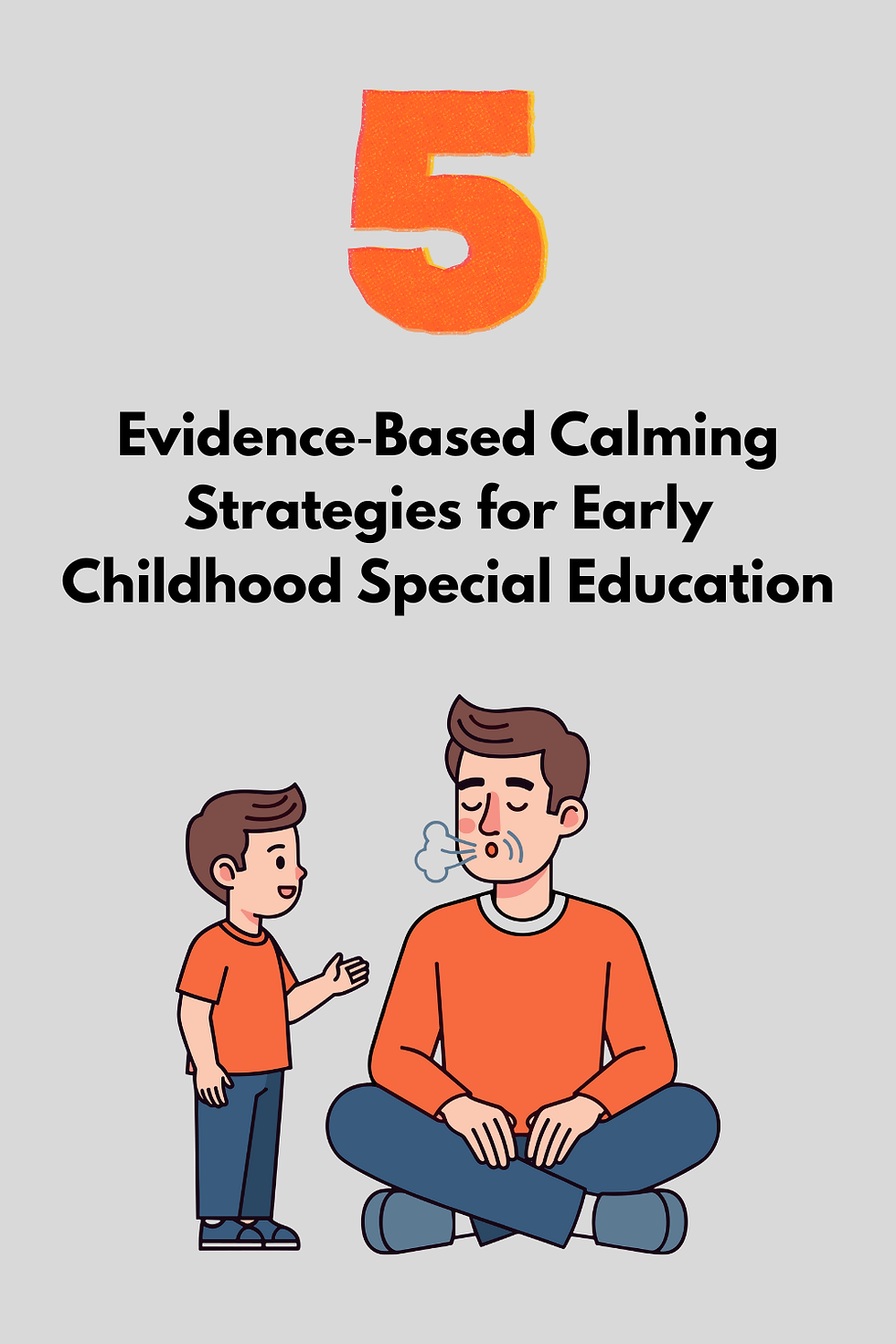
Supporting emotional regulation in early childhood isn’t just helpful — it’s foundational. For preschoolers with disabilities, big feelings can surface quickly, and without the right tools, those moments can derail learning, connection, and confidence. The good news is that decades of research in early childhood, special education, and behavioral science point to simple, powerful strategies that help young children regulate their bodies and emotions.
Below are five evidence‑based calming strategies that work beautifully in preschool and ECSE classrooms — practical enough for busy teachers, adaptable for diverse learners, and grounded in what we know about child development.
1. Visual Supports for Emotional Regulation
Visuals reduce cognitive load and increase predictability, which is especially important for children with autism, language delays, or sensory processing differences. Tools like emotion charts, first‑then boards, and calm‑down sequence cards give students a concrete roadmap for what to do when they feel overwhelmed.
Why it works: Research shows that visual supports improve comprehension, independence, and emotional regulation by providing clear, consistent cues children can rely on.
Try it: Place a small visual “calm plan” in your calm‑down corner or attach it to a lanyard for quick access during transitions.
2. Deep Breathing With Child‑Friendly Cues
Breathing exercises are one of the most effective ways to activate the parasympathetic nervous system — the body’s natural calming mechanism. But preschoolers need playful, concrete prompts.
Evidence‑based variations:
Starfish breathing: Trace a hand while inhaling and exhaling.
Smell the flower, blow the candle: A classic for a reason.
Bubble breathing: Slow, controlled breaths to make the biggest bubble.
Why it works: Deep breathing reduces heart rate, increases oxygen flow, and helps children shift from “fight‑or‑flight” to “rest‑and‑digest.”
3. Sensory Tools That Support Regulation
Sensory strategies are backed by occupational therapy research and can be powerful when used intentionally. The goal isn’t to entertain — it’s to help children meet their sensory needs so they can return to learning.
Helpful tools:
Weighted lap pads
Fidgets with resistance
Noise‑reducing headphones
Textured calm‑down bottles
Soft, squeezable items for proprioceptive input
Why it works: Sensory input helps organize the nervous system, especially for children with sensory processing challenges or autism.
4. Co‑Regulation Through Connection
Before children can self‑regulate, they need co‑regulation — a calm, attuned adult who models steady breathing, gentle tone, and supportive language. This is deeply rooted in attachment and early childhood development research.
What it looks like:
Sitting beside the child at their level
Using a soft, predictable voice
Narrating what you see (“Your body looks tense. I’m here with you.”)
Offering a simple choice (“Would you like to squeeze a ball or take a breath with me?”)
Why it works: Children borrow the adult’s calm until they can create their own.
5. Predictable Routines and Transition Supports
Many challenging behaviors stem from uncertainty. When children know what’s coming next, their anxiety decreases and their regulation increases.
Evidence‑based tools:
Visual schedules
Transition timers
Preview statements (“In two minutes, we will clean up.”)
Songs or chants that signal routine changes
Why it works: Predictability builds safety, and safety builds regulation.
Final Thoughts
Calming strategies don’t need to be complicated to be effective. When we combine visual supports, sensory tools, co‑regulation, and predictable routines, we create classrooms where every child — especially those with disabilities — can feel safe, supported, and ready to learn.

Download the Free Resource on TPT Here: Calming Strategies Cheat Sheet (FREE Resource) | TPT

Comments