10 Spring Sensory Bins for Preschoolers (With Adaptations for Autism & Motor Needs)
- Heather
- Mar 10
- 3 min read
Spring brings color, movement, and fresh energy into early childhood classrooms, making it the perfect season for sensory play. For preschoolers with disabilities—especially those with autism, sensory processing needs, or fine‑motor delays—sensory bins offer meaningful opportunities to explore, regulate, communicate, and connect.
These 10 spring sensory bins are low‑prep, budget‑friendly, and intentionally designed with inclusive adaptations so every child can participate confidently.
🌱 1. Garden Dig & Plant Bin
Base: Kinetic sand or dry black beans Materials: Mini pots, artificial flowers, scoops, child‑sized gardening tools Skills: Fine motor, pretend play, vocabulary (plant, dig, flower)
Autism Supports:
Add real‑photo flower cards for matching
Use a simple “first dig, then plant” visual
Motor Supports:
Choose chunky, easy‑grip tools
Stabilize pots with Velcro or a tray lip
🌧️ 2. Rainy Day Water Bin
Base: Water tinted blue Materials: Mini umbrellas, rubber ducks, cups, funnels Skills: Cause/effect, pouring, bilateral coordination
Autism Supports:
Provide visual rules (gentle hands, water stays in bin)
Add floating picture cards for matching
Motor Supports:
Use lightweight cups
Offer hand‑over‑hand support for pouring
🌼 3. Spring Flower Soup
Base: Water + flower petals (real or artificial) Materials: Ladles, bowls, spoons Skills: Scooping, stirring, sensory regulation
Autism Supports:
Offer optional scents (lavender, lemon) with clear opt‑in choices
Provide a simple “recipe card” with visuals
Motor Supports:
Use shallow containers for easier reach
Add built‑up handles to spoons

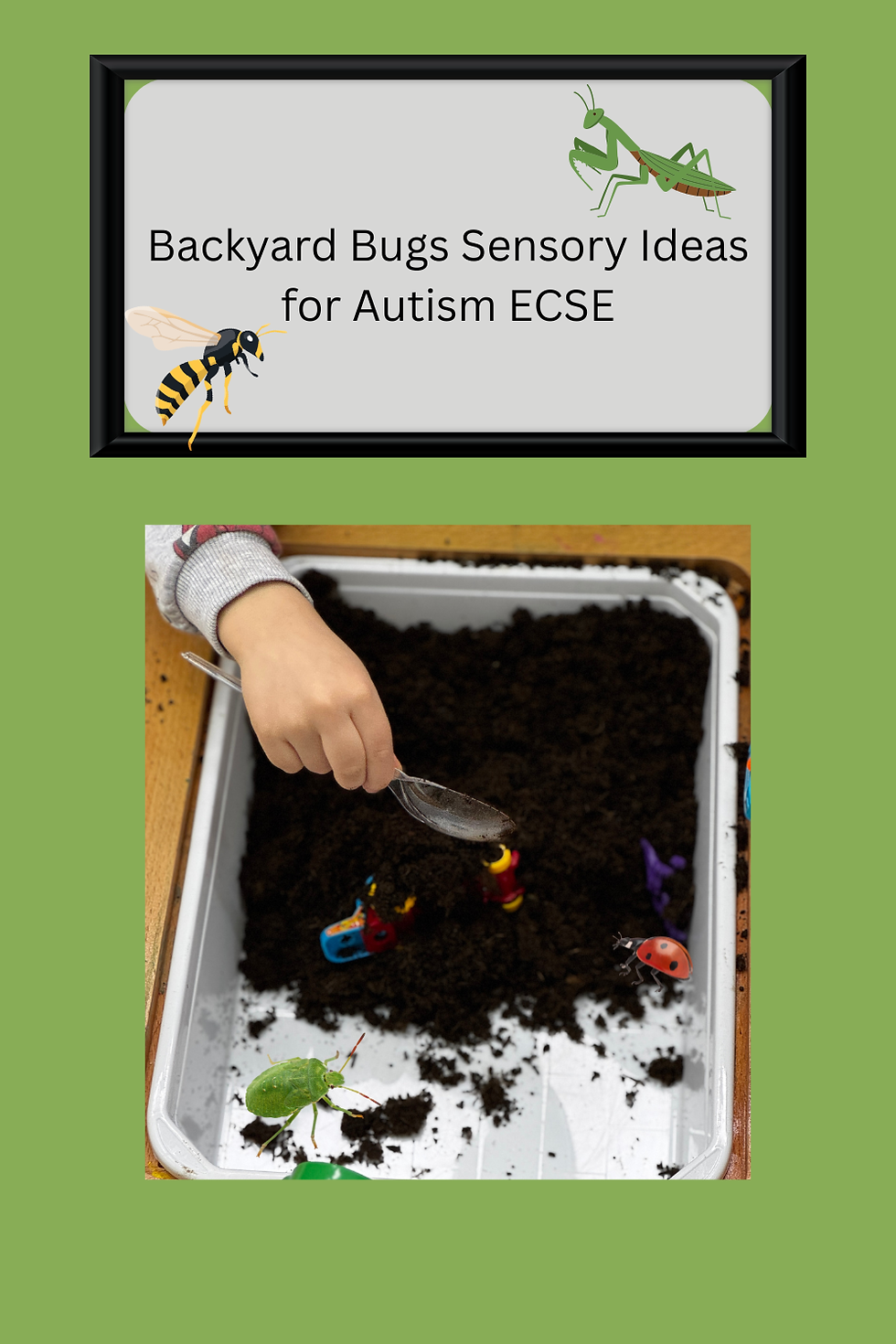
🐞 4. Bug Hunt Sensory Bin
Base: Shredded paper or Easter grass Materials: Plastic bugs, magnifiers, tongs Skills: Sorting, counting, vocabulary (crawl, wings, antennae)
Autism Supports:
Use color‑coded bugs for predictable sorting
Add a “find the bug” visual checklist
Motor Supports:
Swap tongs for scoopers
Use larger bugs for easier grasp
🌈 5. Spring Color Sorting Rice Bin
Base: Dyed rice in spring colors Materials: Cups, scoops, sorting bowls Skills: Color ID, fine motor, sensory regulation
Autism Supports:
Provide color‑coded bowls
Add a simple “match the color” visual strip
Motor Supports:
Use wide‑mouth containers
Offer adaptive scoops
🐣 6. Baby Animal Rescue Bin
Base: Cotton balls or pom‑poms Materials: Mini farm animals, tweezers, cups Skills: Pretend play, language, problem‑solving
Autism Supports:
Add simple scripts (“Help the baby chick!”)
Use a visual map showing where each animal goes
Motor Supports:
Replace tweezers with scoopers
Use larger animals for easier grasp
🚗 7. Spring Sensory Car Wash
Base: Soapy water + sponges Materials: Toy cars, brushes, drying towels Skills: Sequencing, bilateral coordination, sensory regulation
Autism Supports:
Provide a visual sequence (wash → rinse → dry)
Offer gloves for tactile sensitivity
Motor Supports:
Use large sponges
Stabilize the bin with a non‑slip mat
🦋 8. Butterfly Life Cycle Bin
Base: Dry pasta (rotini = caterpillars, shells = eggs, bowties = butterflies) Materials: Life cycle cards, scoops Skills: Science concepts, sequencing, vocabulary
Autism Supports:
Use real‑photo life cycle visuals
Add a simple matching board
Motor Supports:
Choose larger pasta shapes
Provide hand‑over‑hand support for sequencing
🔍 9. Spring Sensory Treasure Hunt
Base: Dry beans or chickpeas Materials: Hidden Spring items (flowers, eggs, bugs) Skills: Object permanence, language, joint attention
Autism Supports:
Provide a visual treasure checklist
Add a “finished” bucket for completed finds
Motor Supports:
Use shallow bins
Offer large, easy‑to‑grasp items
🪺 10. Bird Nest Building Bin
Base: Shredded paper, yarn, raffia Materials: Plastic eggs, small bowls (nests), tweezers Skills: Fine motor, creativity, pretend play
Autism Supports:
Add a model nest for reference
Provide simple steps (gather → place → build)
Motor Supports:
Use larger materials
Offer scoopers instead of tweezers
🌷 Final Thoughts
Spring sensory bins bring joy, curiosity, and connection into ECSE classrooms. With the right supports—visuals, adaptive tools, predictable routines—every child can participate meaningfully. These bins are simple to prep, easy to differentiate, and full of opportunities for language, motor practice, and sensory regulation.
Whether you’re refreshing your centers or planning a full sensory rotation, these inclusive spring bins will brighten your classroom and support every learner.
Comments